


In Japan the best-known format is プレゼント交換: at a party, everyone brings a gift and they're handed out at random, often passed around a circle to music.
Secret Santa, with names drawn in advance and a gift for one specific person, shows up mainly in international offices and mixed groups. With low, fixed budgets and careful wrapping, it fits local customs well.
Running it in a Japanese office
Keep the budget modest and explicit
Japanese office exchanges tend to work best when the budget is modest, explicit and equal for everyone. The exact amount depends on the group, but the principle holds: the gift should feel thoughtful and well presented, not expensive or status-heavy.
State the ceiling before the draw and treat going far above it as breaking the rule, not as generosity.
Wrapping is part of the gift
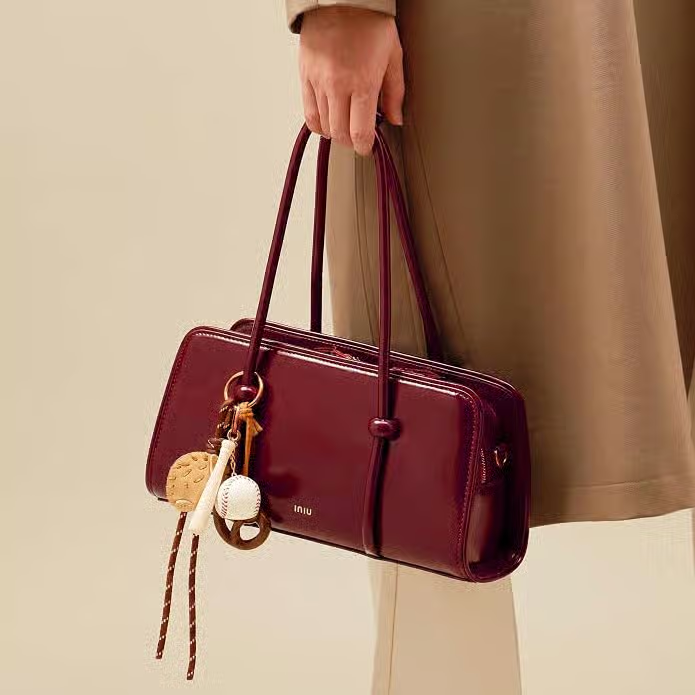
Presentation matters. A department-store bag, tissue paper or a neatly wrapped handmade item can make a small gift feel respectful rather than casual.
The point isn't luxury; it's visible care. State the wrapping expectation in plain terms so international participants don't mistake a bare item for acceptable informality.
Split by relationship, not by gender
A Japanese draw is more likely to be split by relationship, 同僚 (coworkers), 親友 (close friends), 家族 (family), than by gender.
The gift logic follows the relationship rather than an assumption about gender, which tends to work better and age better.
A family Secret Santa among Japanese relatives leans on the same split: cousins draw cousins, the older generation draws among itself, and the gift tier reflects the relationship.
Edible gifts keep the friction low
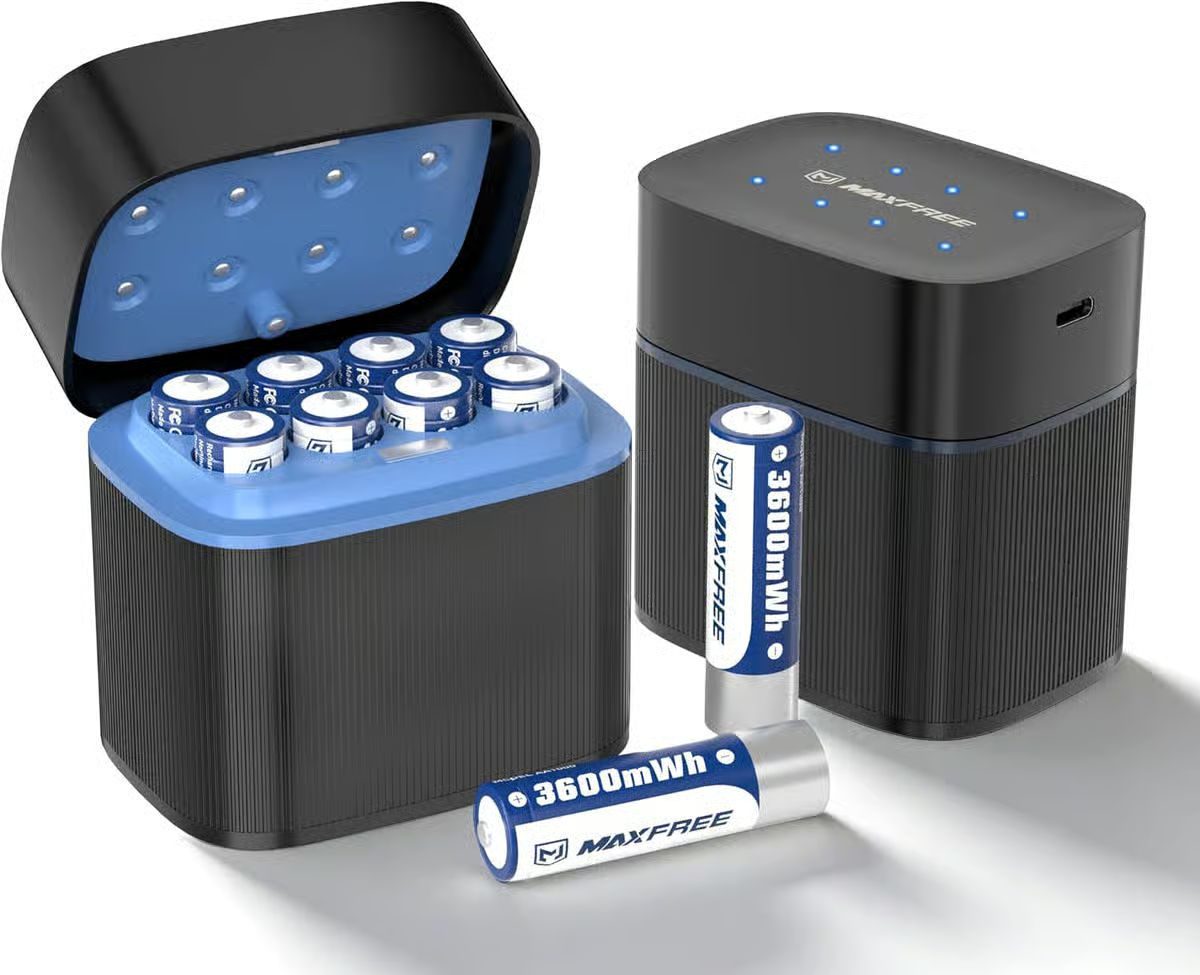
Food gifts, especially seasonal sweets or shelf-stable snacks, are often a safe starting point because they're easy to share and don't add clutter.
Still, check dietary restrictions, allergies and religious limits before treating food as neutral. A small box from a thoughtful maker usually reads as more deliberate than a larger generic item.
One practical detail
Japan's gifting season overlaps with お歳暮 in December, the year-end gift to superiors and clients, so the casual office draw sits alongside that longer-standing tradition, not in place of it.
Frame the シークレットサンタ as an extra, playful thing, not a replacement, and don't let it drift upward into the お歳暮 register, which has its own etiquette and price points entirely.
Run it in Japanese
Cuchumbo runs in Japanese. Create the exchange, share the invitation, and run a シークレットサンタ that fits the Japanese office.